
Zini teapots are widely loved, so the market is filled with affordable molded copies that look similar at first glance. If you do not know what details to watch for, it is easy to pay for a low-quality piece that cannot perform well for gongfu tea. You do not need professional testing tools; a careful visual check and simple touch test can help you filter out poor options.
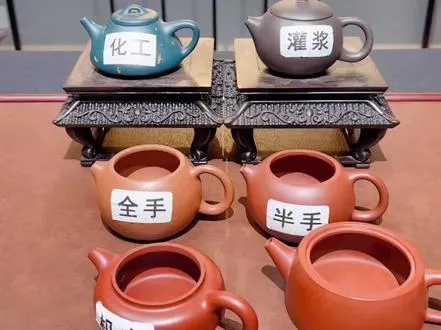
Start with the clay surface. Authentic good Zini has subtle, natural fine grains, not a perfectly smooth plastic-like finish. Cheap replicas often use blended clay powder with colour additives. Their surface looks unnaturally bright, flat or too uniform, without the faint mineral speckles that natural Zini carries. When you touch it, genuine Zini feels fine but alive, while fake ones feel slippery and lifeless.
Check the fit between lid and rim. Handmade Zini teapots have consistent but not mathematically perfect gaps. The lid spins smoothly without sticking, and it will not rattle loosely. Mass-produced pots usually have either overly tight, stiff lids or uneven gaps. Their carving details on spout, handle and body are repetitive and shallow, lacking the soft natural flow of hand shaping.
Also pay attention to wall thickness. Quality Zini pieces have balanced wall thickness. Too thin walls are fragile and hard to craft properly, while overly thick molded walls lose the characteristic heat control of Zini clay. Keep these points in mind when shopping, and you can greatly reduce the chance of bringing home a mass-produced substitute.
Leave a Reply