
How do you choose between fully handmade and semi-handmade Zisha teapots?
Many people automatically believe fully handmade Zisha teapots are always more valuable and better. After all, “fully handmade” sounds premium. But have you ever wondered why some semi-handmade teapots on the market sell for higher prices than fully handmade ones?
With years of experience making and selling tea ware, I, Hui Liang, will talk about this honestly for customers purchasing Zisha teapots and ceramic tea sets from us. Zisha clay is a type of ceramic, so these principles also apply to most ceramic tea vessels.
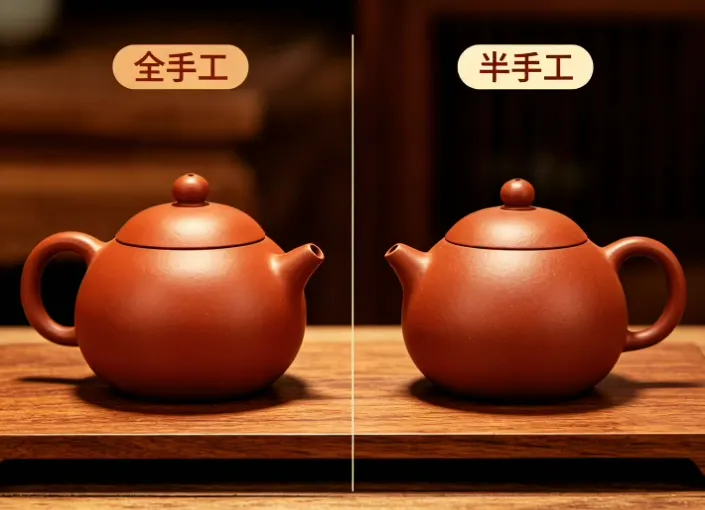
1. Fully handmade ≠ Artwork, semi-handmade ≠ Cheap goods
There is an old popular saying: “Fully handmade teapots are artworks, while semi-handmade teapots are just commercial goods.” This statement seems reasonable but is one-sided. It equates the production tool to the value itself. It is as ridiculous as saying calligraphy written only with wolf-hair brushes counts as art, while works made with mixed-hair brushes are mere crafts.
The value of a Zisha teapot lies in the maker’s skill and aesthetic taste, not the tools they use. Molds are only auxiliary forming tools and cannot decide the final quality of a teapot. Whether a teapot carries unique charm depends on the craftsman’s mastery and dedication, rather than the “fully handmade” or “semi-handmade” label.
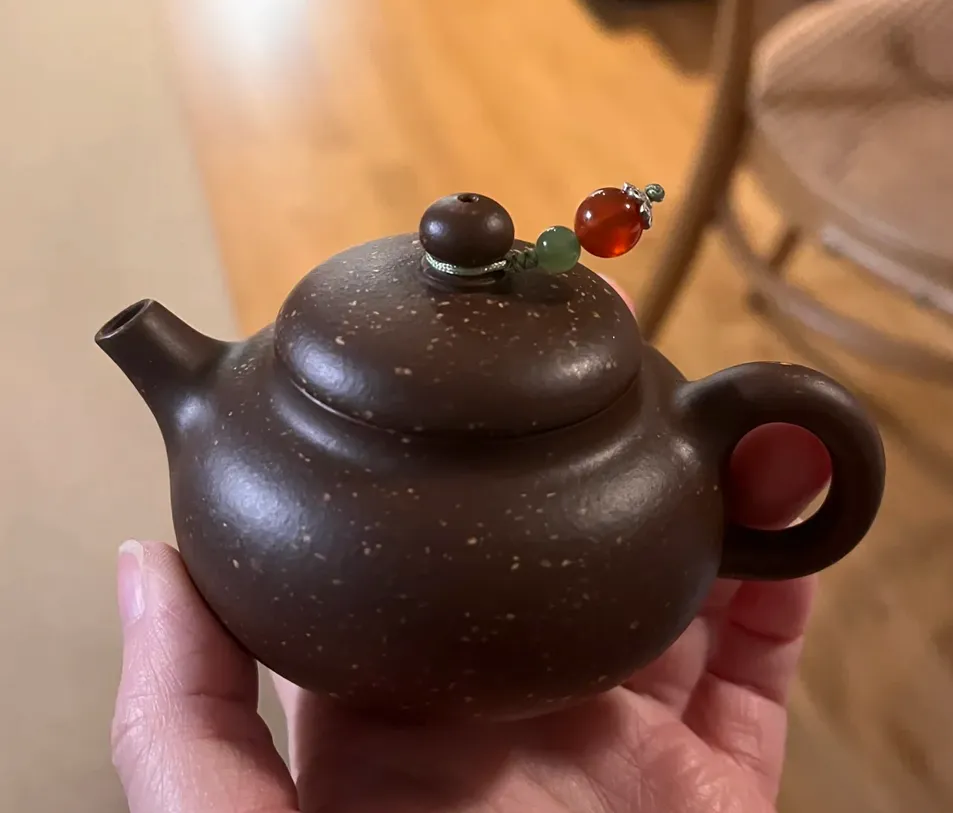
2. What is the “Qi Yun” (vital charm) of a Zisha teapot?
Some tea lovers treat “Qi Yun” as vague metaphysics or a marketing trick. In fact, this charm is real, just like the brush spirit in calligraphy or vivid expression in painting. Take Wang Xizhi’s *Lanting Xu*. Even after thousands of years, viewers can still feel the natural, unrestrained grace in its characters.
This aura cannot be replicated by standardized computer fonts; it is the unique mark left by the creator. The same applies to Zisha teapots. The curves of the pot body, the tension from clay patting, and fine detail work all come from the craftsman’s communication with the raw clay. These subtle traces combine and build the teapot’s unique temperament — what we simply describe as attractive or unattractive.
3. Why are some semi-handmade teapots more expensive than fully handmade ones?
First, there is a big gap in the skill level of makers. An experienced master can use molds for semi-handmade forming, then refine the pot repeatedly to endow it with wonderful charm. On the other hand, a beginner may create a stiff, lifeless fully handmade teapot due to immature techniques.
Second, meticulous finishing drives up costs. A semi-handmade teapot only uses a plaster mold to shape its body; most other steps are still done manually. Many buyers mistakenly think semi-handmade pots equal machine-made pots. That is wrong. Machine-thrown pots and slip-cast pots are mass-produced pipeline goods. Semi-handmade teapots still follow traditional craft rules. High-end semi-handmade pots may be trimmed dozens of times to reach the ideal look, making them more valuable than crudely made fully handmade teapots.
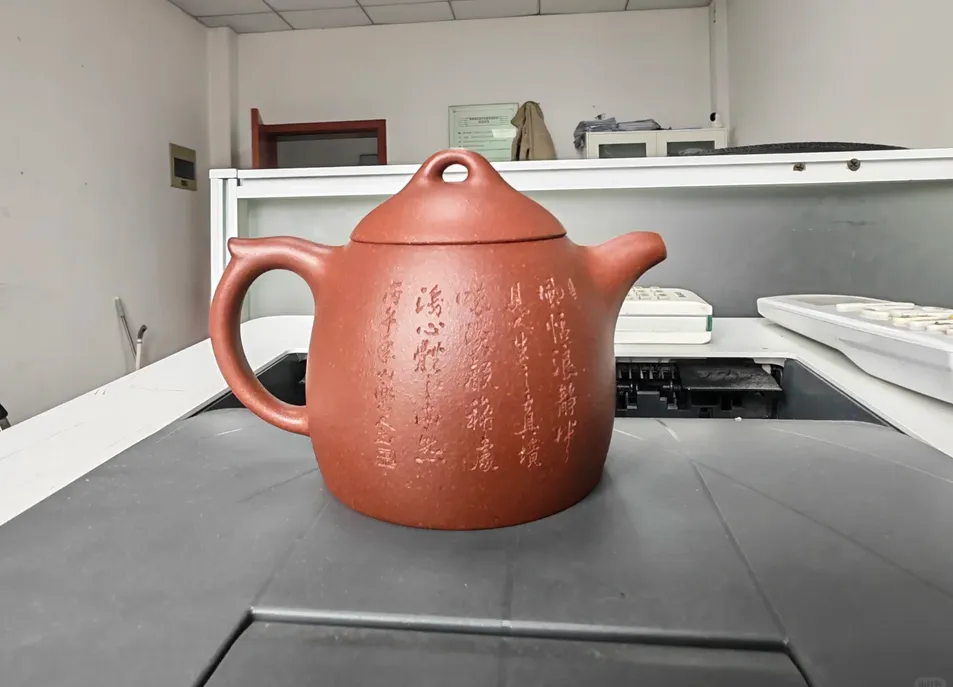
Third, recognition from the market and collectors. Buyers pay for the overall quality of a teapot instead of its production method. If a semi-handmade teapot outperforms ordinary fully handmade pots in shape, clay and finish, the market will naturally set a higher price for it.
4. Do not blindly chase the “fully handmade” label when buying teapots
Many tea collectors obsess over the fully handmade tag and ignore the teapot’s real quality. Whether fully handmade or semi-handmade, four core factors determine value: premium raw ore clay, smooth lines and precise details, balanced shape and unique charm, and the maker’s aesthetic and craftsmanship. A semi-handmade teapot excelling in all these aspects deserves a higher price than average fully handmade teapots.
5. Tools are secondary; the craftsman matters most
The appeal of Zisha teapots comes from the passion and aesthetic vision the artisan pours into the work. No matter fully handmade or mold-assisted, a remarkable teapot always requires abundant time and thoughtful design. When you see a costly semi-handmade teapot, do not rush to question its price. Check its clay, lines and charm first. You may find it is better value than many overhyped fully handmade teapots.
My personal opinion
The value of a Zisha teapot is never defined by whether it is fully handmade or semi-handmade. It lies in how well it showcases the craftsman’s skill and taste. I hope this guide helps you evaluate teapots rationally and avoid being misled by simple handmade labels.