
Oolong tea sits between green tea and black tea, with rich floral, fruity and roasted notes. It needs stable heat and gentle breath from the pot to release its layered charm, and this is exactly where a Yixing purple clay teapot shines. Many oolong fans stick to clay pots after trying different porcelain wares, and the difference in taste is easy to notice.
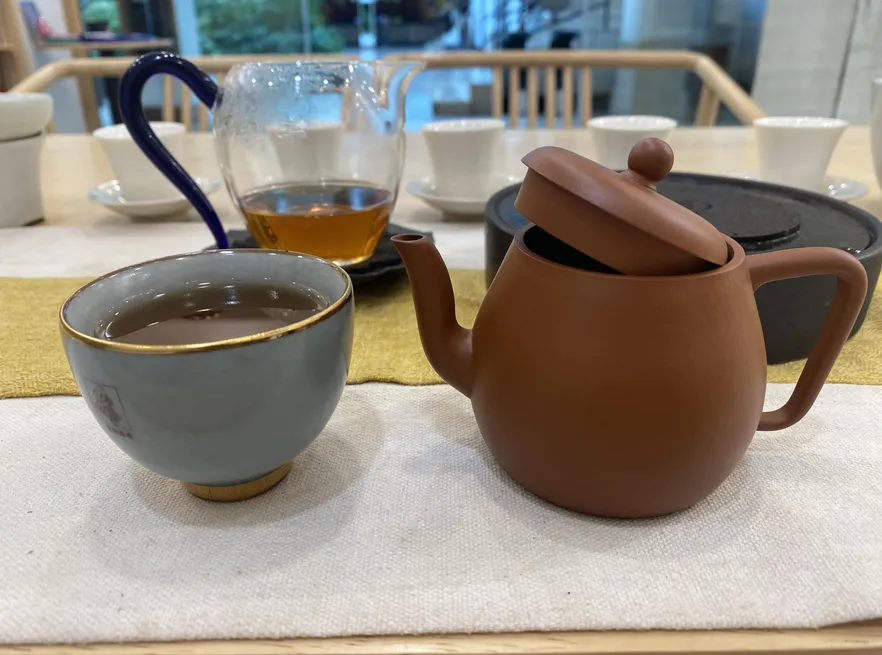
Natural porosity of purple clay is the core advantage. Tiny gaps inside the clay hold heat evenly without trapping too much stagnant moisture. For heavily roasted oolong, this helps soften bitter and burnt hints, bringing out the sweet rock rhyme. For light fragrance oolong, the clay will not swallow up delicate floral scent as fast as dense Zini clay does.
Tea lovers often overlook how heat retention affects infusion rhythm. Oolong gongfu brewing relies on short, repeated steeps. The purple clay pot warms up quickly and keeps a steady temperature across multiple pours. Thin porcelain cools down too fast, while overly dense clay may overcook the tender leaves and ruin the bright aroma.
It is worth noting that clay choice still matters. Medium porosity purple clay works for most oolong varieties. If you mainly drink heavily roasted oolong, you can choose a slightly denser clay type. Light fragrance oolong pairs better with looser, more breathable clay. Keeping one pot for one type of oolong prevents mixed flavors from building up over time.
After repeated use, a thin layer of tea oil forms on the pot wall. This patina does not magically change the tea overnight, but it creates a smoother, softer brewing environment as time goes by. This slow, subtle change is part of the fun of owning a purple clay teapot for oolong.
Leave a Reply