
Oolong tea covers a wide range of oxidation levels, from lightly oxidized green oolong to heavily roasted dark oolong. When using a Yixing Zisha teapot, water temperature is one of the key controls that shapes your final tea soup. The clay holds heat continuously, so the temperature you start with will have a bigger impact than brewing in glass or porcelain ware. Many new tea lovers simply boil water and pour it directly for every oolong, which often burns the tender leaves or fails to unlock the deep roasted aroma.
Lightly oxidized oolong such as Tieguanyin and high mountain oolong works best at 88°C to 92°C. These teas have fresh floral and green notes. If you use fully rolling boiling water above 95°C, the tender leaf edges will scald quickly, bringing out obvious bitterness and a cooked grass taste. The delicate fragrance will disappear within the first two infusions. You can let the boiled water rest for 30 to 60 seconds before pouring into the pot to lower the temperature naturally.
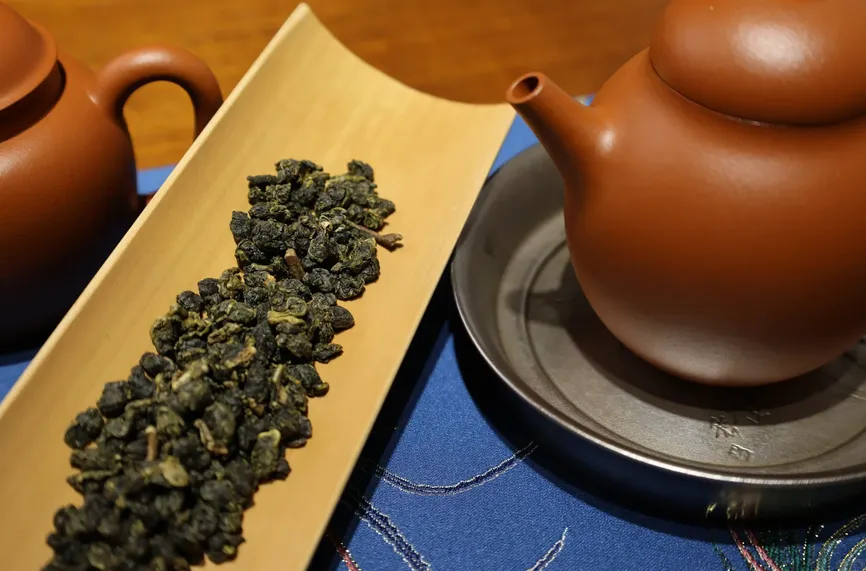
Medium roasted oolong like medium bake Da Hong Pao is suitable for 92°C to 96°C water. This type balances floral sweetness and warm roasted flavor. A moderate high temperature helps release the layered aroma without rushing the bitter substances. The heat retention of Zisha clay will keep the temperature stable during short gongfu steeps, so you can get consistent sweet soup from the first infusion to the later ones.
Heavy roasted old oolong and aged rock tea need boiling water close to 98°C to 100°C. Long-time roasting forms stable roasted compounds inside the tea leaves. Lower temperature cannot break down these substances fully, and the soup will taste thin and empty. The thick, steady heat from Zisha clay matches this requirement perfectly. Remember to preheat the pot thoroughly first, so the water temperature will not drop sharply after entering the teapot.
Besides temperature, you also need to adjust the steeping time together. Higher temperature means shorter steep time. Even if you use the correct temperature, over-steeping will still make oolong bitter. It is also worth noting that thin-wall Zini teapots lose heat faster than thick purple clay pots, so you can choose slightly higher starting water temperature when using thin Zini pots for roasted oolong.
There is no single fixed temperature rule for all oolong. The best way is to start with the recommended range, then adjust based on your own taste. After several tries, you will find the sweet spot that shows your oolong’s most attractive aroma and flavor.
Leave a Reply