
Yixing Zisha clay is porous, which is its biggest advantage for brewing tea, yet this feature also makes it easy to absorb moisture. If you store the pot wet or in a damp room, mold may slowly grow on the surface or inside the pot. Many new tea users confuse mold with natural patina, and keep using the pot directly, which will ruin the flavor of tea and bring health risks. It is important to tell the difference and handle the problem correctly.
Genuine mold usually looks fuzzy, powdery, and comes in white, green or black spots, while natural patina is smooth and integrated with clay. Patina builds up slowly from repeated tea oil and gentle wiping. It follows the clay texture and will not form raised fuzzy layers. Mold often appears in hidden areas, such as the gap between lid and rim, the inner bottom of the pot, and the corner around spout and handle. It usually comes with a stale, musty smell that cannot be covered by tea scent.
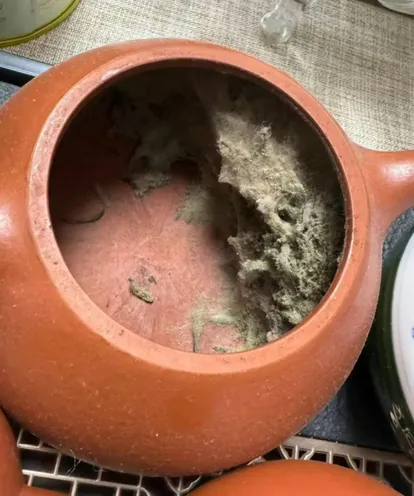
Do not use strong disinfectant, bleach or scouring powder to clean moldy Zisha teapot. Chemicals will sink into the clay pores and stay there permanently. Every later brew will bring out chemical taste and spoil your tea. The safe cleaning method only uses warm water and soft tea cloth or natural bamboo brush. Scrub the mold spots gently, rinse many times, then soak the pot in clean warm water for several hours to wash away residual mold spores.
Thorough drying is the most critical step after mold removal. After scrubbing and rinsing, wipe off surface water completely. Place the pot in a cool, well-ventilated place with the lid open or slightly ajar. Never close the lid tightly before it is fully dry. Keep it away from dark humid cabinets. You need to check it repeatedly for 2 to 3 days to make sure no moisture remains inside the clay pores.
Once mold is cleaned and the pot is fully dry, you can re-season it slowly. Start with mild tea, brew and rinse it repeatedly, and dry it fully after each session. If the mold is deep inside the clay and the musty smell still stays after multiple rounds of cleaning and drying, this pot is hard to recover. Continuous mold growth means the clay has absorbed too much contamination, and it is better not to use it for drinking tea.
The best way is prevention. Always empty tea leaves and rinse your pot right after use. Form the habit of drying it fully before storage. A dry and ventilated environment keeps your Zisha teapot healthy and avoids mold trouble permanently.
Leave a Reply