

People often ask: All Zisha teapots look similar, yet fully handmade ones can easily cost thousands or even tens of thousands, while machine-made versions sell for just tens or a hundred. Where does this massive price gap come from? Those familiar with the craft know clearly that this huge price difference does not simply stem from the word “handicraft”. The true value lies in the rarity of the clay, dedication to craftsmanship, and the artisan spirit built up over time. Every penny of the price is justified and backed by tangible qualities. I have been immersed in this trade for more than twenty years. Over these decades, I have seen countless hastily made counterfeits, and stood alongside a group of veteran craftsmen who hold fast to their skills. Gradually, I have come to understand the core truths of this craft. People call me Hui Liang.
1. Rarity and Purity of Original Local Ore
The value of fully handmade Zisha teapots hinges on “original local ore”. Not all Zisha clay can justify the price tag of a handcrafted teapot. The area around Huanglong Mountain and the southwestern part of Zhaozhuang Mountain in Dingshu Town, Yixing, hosts this unique local mineral deposit. Formed through hundreds of millions of years of volcanic eruptions and natural weathering, its geological makeup can never be replicated by ore mined from other regions.
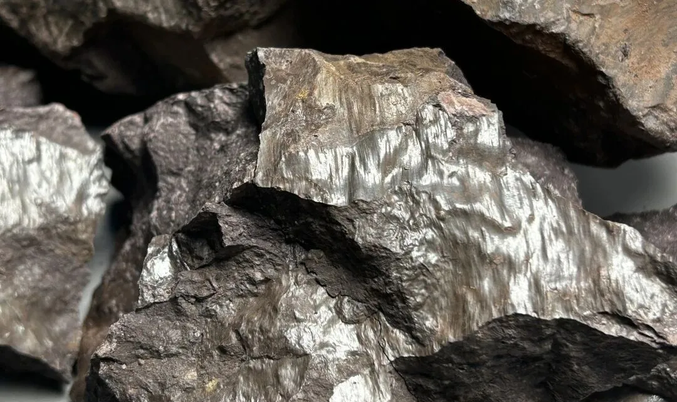
Processing original ore clay is time-consuming and labour-intensive, and it accounts for part of the total cost. Raw clay as delivered cannot be used directly. It first undergoes natural air-drying and crushing, followed by repeated pounding with wooden mallets for 300 to 500 times. This evenly distributes clay fibres and removes trapped air bubbles. After that, the clay must be sealed and aged for three to six months or longer. This process makes the clay smooth and mellow, while lowering shrinkage and cracking risks during firing. Hui Liang has seen merchants cut corners by substituting local ore with clay from other mining areas and adding chemical pigments for colouring. Teapots made this way have unnatural colour and poor air permeability. They may release strange odours while brewing tea. Such teapots are not genuine Zisha at all. Hui Liang always insists on sourcing only original local ore as raw material for Zisha teapots. Even though it costs several times more than ordinary clay, Hui Liang never compromises at the source. Premium clay is the foundation of a great teapot.
2. The Slowness and Precision of Fully Handmade Craftsmanship
Secondly, the high price comes from the slowness and difficulty of handcrafting. This artisan spirit and warmth cannot be replaced by machines. When making fully handmade teapots, no moulds are used. The whole process relies on the artisan’s hands plus simple tools such as bamboo beaters, wooden turntables and fine smoothing needles.
Creating one complete teapot takes roughly 7 to over 30 days, and no carelessness is allowed in any step. The veteran craftsmen Hui Liang collaborates with have more than 20 or 30 years of experience. They do not use moulds. Instead, they cut clay slabs and beat the teapot body by touch and experience. Force must be evenly controlled to maintain proper permeability. Too loose and the pot leaks; too compact and it loses the natural breathability of Zisha. This delicate balance can only be mastered with over two decades of practice.
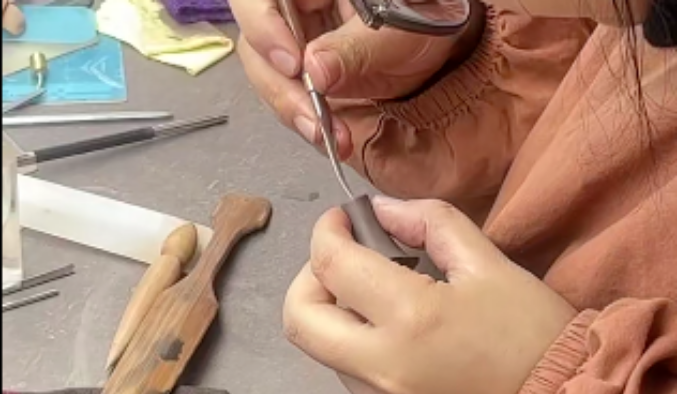
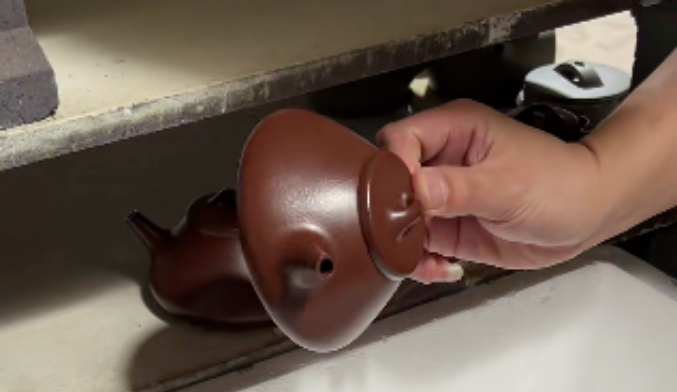
Veteran artisans believe fine work takes time. When beating the teapot body, they strike slowly from bottom to top. The three key stages of forming the base, shaping the waist and cutting the opening require hundreds of repeated practices to achieve smooth natural lines. After attaching the spout and handle, the angle error must stay within 0.5 degrees; otherwise, the water flow will be affected.
3. Hidden Costs from Low Success Rate
The most challenging factor is the low yield rate of fully handmade teapots, which contributes greatly to the high cost. No matter how experienced the artisan is, problems may occur during clay preparation, forming, air-drying and kiln firing. Poor humidity and temperature control during air-drying can crack the teapot body. Deviations in kiln temperature during firing may cause deformation or blemishes, and in the worst cases, the pot shatters completely. Normally, fully handmade teapots only have a 40% to 60% success rate. Sometimes only a small number of usable pieces come out of one kiln batch. Defective works have to be discarded, and all material and labour costs are shared among the qualified finished teapots. After years in this business, Hui Liang understands this hardship deeply. That is why Hui Liang never pushes veteran craftsmen to rush orders. The value of handwork lies in the pursuit of perfection and a calm, unrushed mindset.
4. Unique Collectible Value and Evolving Character
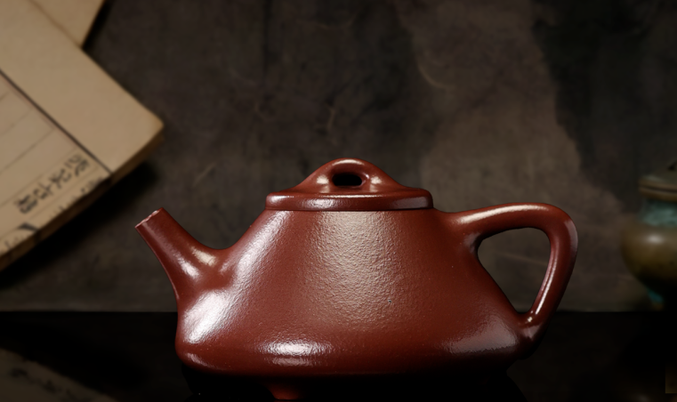
Another often overlooked point is the uniqueness and evolving character of fully handmade Zisha teapots. Machine-made teapots are identical and soulless. In contrast, every fully handmade teapot is one of a kind. Variations in the force applied during slab beating, subtle marks left during surface smoothing, natural textures at slab joints, and minor kiln colour changes during firing give each teapot its own personality. These details cannot be duplicated by machines. Moreover, teapots handcrafted from original local ore improve with use. Gradually they develop a warm, glossy patina. Tea leaves release richer, mellow flavours inside Zisha clay. The joy of “teapot seasoning” can never be obtained from cheap mass-produced pots.
Leave a Reply