

How to Authenticate a Zisha Teapot with Simple Methods
“I spent a lot of money on this Zisha teapot — is it genuine?”
This question troubles countless tea lovers. The world of Zisha teapots can feel overwhelming, yet it is not impossible to understand. With practical techniques, anyone can learn to spot a real piece. This guide avoids vague descriptions like “artistic charm” or “spiritual vibe”. It only shares simple, hands-on identification methods even beginners can use.
Ready? Let’s get started.
Step 1: Examine the Clay — The Soul of the Teapot
The foundation of any Zisha teapot lies in its clay. Authentic Yixing Zisha clay is unique natural mineral pottery soil rich in iron. Its most famous trait is being permeable to air but not water. Keep these key points in mind.
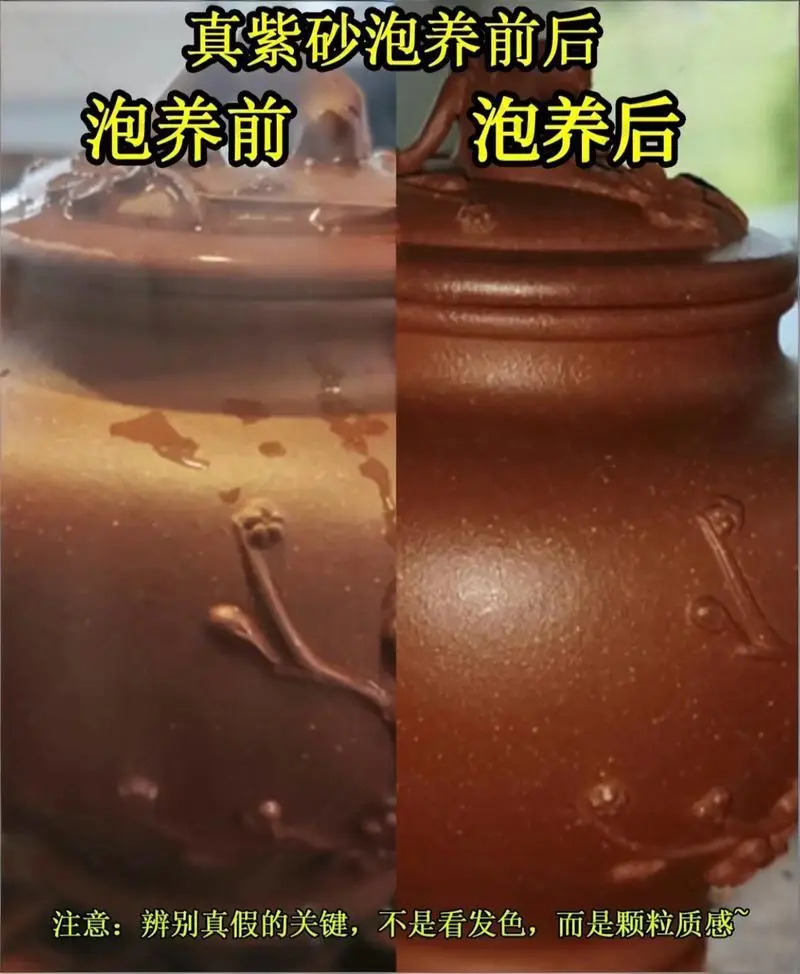
Check the colour: Genuine Zisha has a restrained, earthy tone that never looks tacky. Whether purple, red or yellow, it will never have harsh, bright shades. If a teapot appears unnaturally vivid and glossy like painted lacquer, be cautious. It is likely a chemically coloured pot with artificial pigments.
Check the texture: View the teapot surface sideways under light. Real Zisha shows tiny natural speckled grains, yet it feels smooth and warm to touch. It is neither glass-smooth nor rough enough to scrape your hand. This subtle matte finish, also known as its natural water lustre, is the unique beauty of authentic Zisha clay.
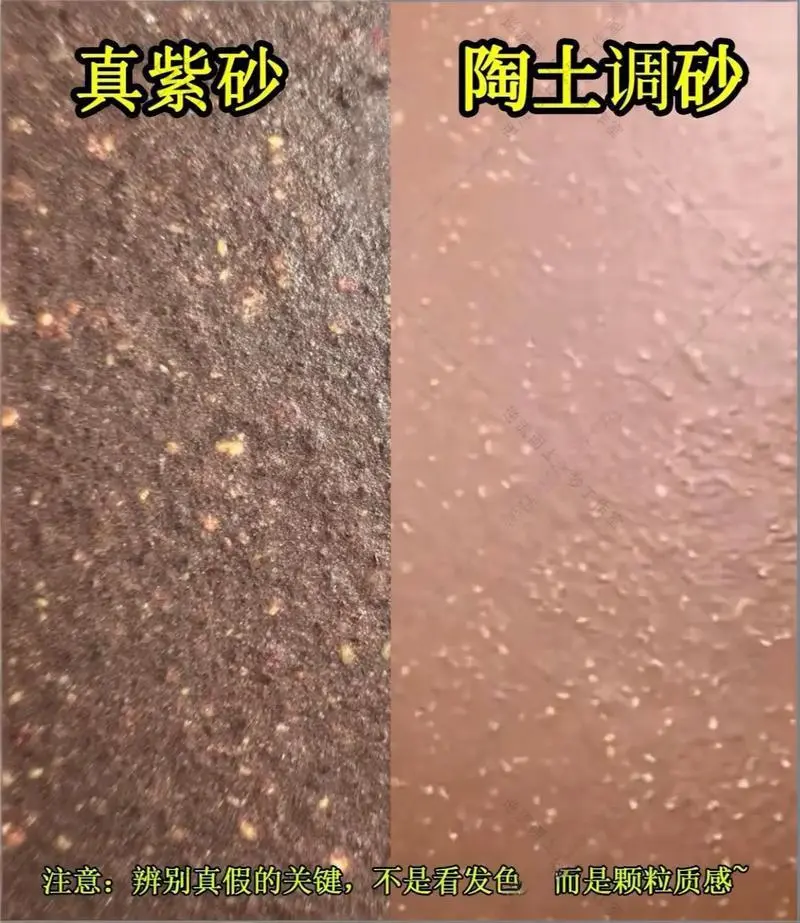
Smell the odour: When you pour hot water over a brand-new genuine Zisha teapot, you will notice a faint earthy kiln-fired scent. Fake teapots, especially chemically treated ones, may release sharp, unpleasant chemical odours.
Practical test for beginners: Run your hand over the teapot surface. It should feel a mix of sandy texture and natural oiled smoothness. If it feels as slippery as glazed porcelain, or as rough as sandpaper, the teapot is most likely not authentic.
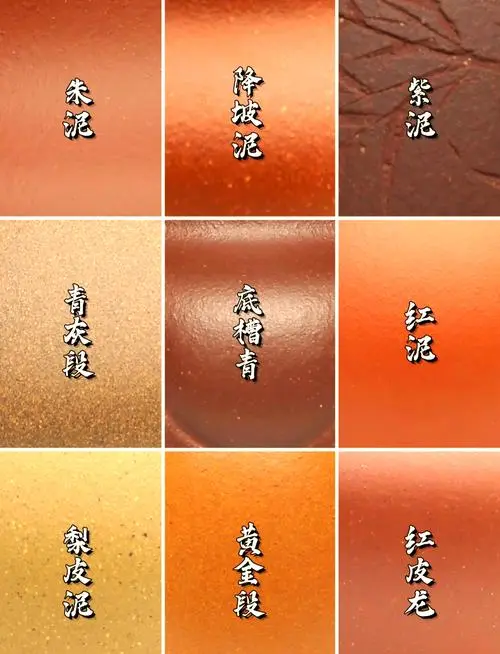
Step 2: Inspect the Shape — The Character of the Teapot
A high-quality Zisha teapot always has a balanced and unified form. This is not merely an artistic pursuit; it also serves practical purposes for brewing tea.
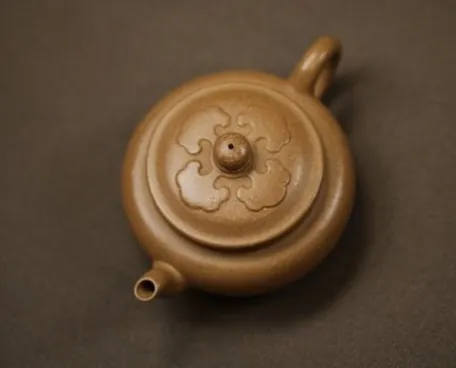
Balanced proportions: The spout, handle, lid and body must be well-proportioned in size, length and thickness. The whole piece should look comfortable, steady and elegant. Counterfeit teapots often fail to achieve this balance, with stiff, ill-proportioned shapes.
Smooth lines: The lines running from the spout to the handle flow naturally and carry subtle strength. Whether round, square or another form, all transitions should be clean and crisp without messy, uneven edges.
Details reveal quality: Examine fine points such as the spout opening, joints of the handle, and the lid knob. Authentic teapots feature meticulous craftsmanship on these parts, free of burrs or rough unfinished surfaces.
Step 3: Check the Craftsmanship — The Framework of the Teapot
Craftsmanship forms a vital part of a Zisha teapot’s value. Fully handcrafted Zisha teapots carry subtle traces of handwork, and these marks serve as key clues for authentication.
Inner wall seal: Many artisans stamp their personal seal on the inside wall of the teapot. This detail is extremely hard for mould-made machine teapots to replicate.
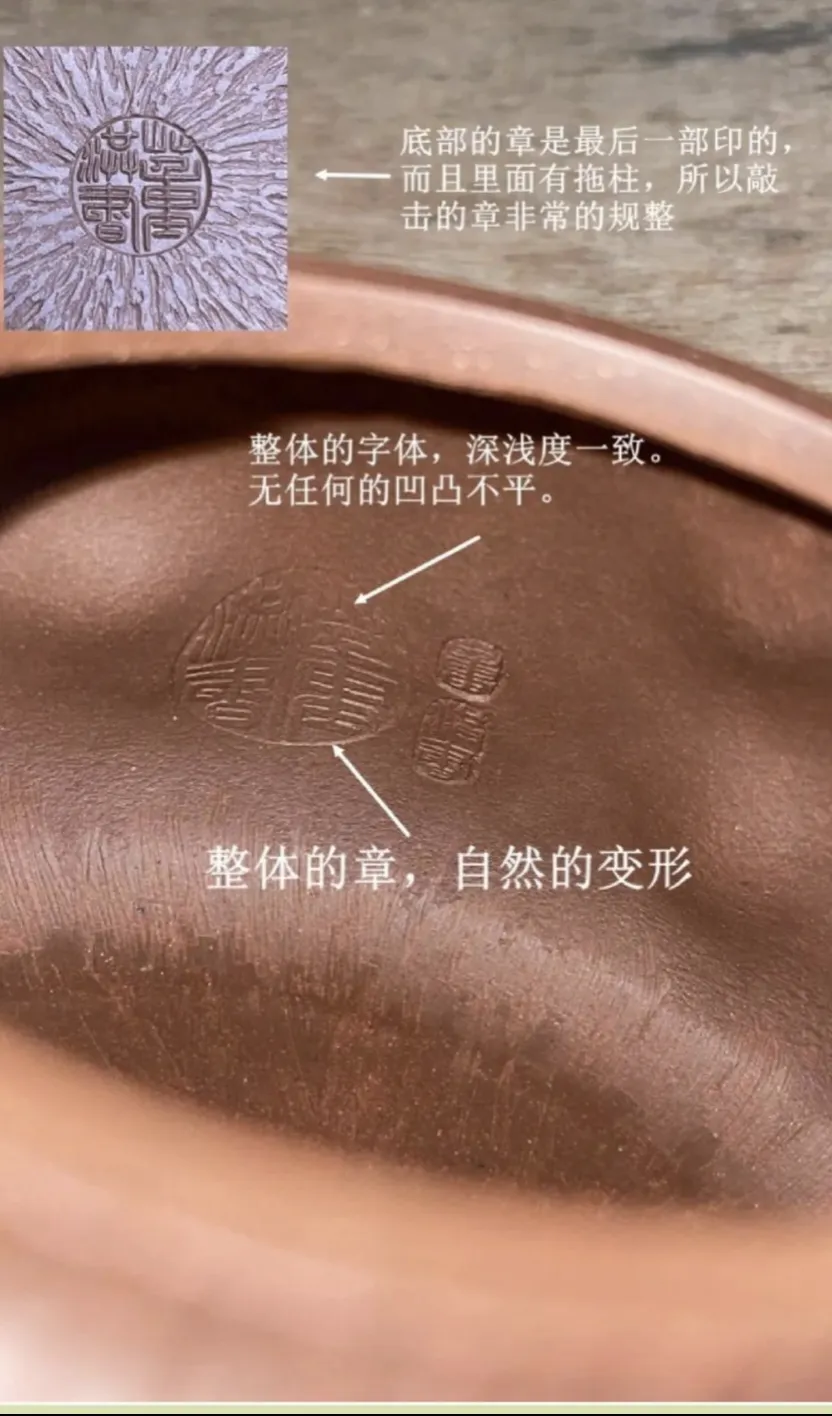
Seam marks: Fully handcrafted teapots are shaped by beating clay slabs and joining them together. If you look closely inside the pot, you may spot faint seam lines from the joined clay slabs. In contrast, slip-cast or machine-pressed teapots have extremely smooth inner walls, or only circular concentric texture marks.
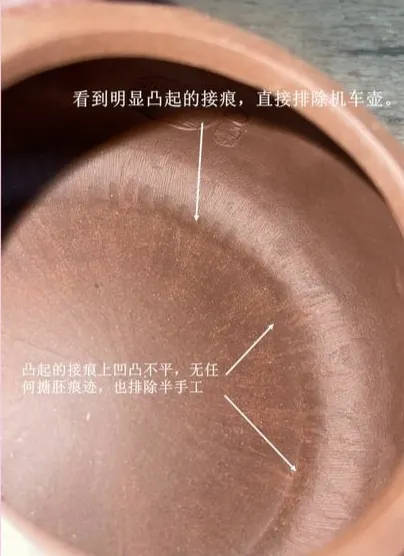
Examine the interior: Handmade teapots feature loose clay seams with distinct wrinkled textures near the bottom. Semi-handmade teapots have tight clay seams with consistent texture from top to bottom and smooth transitions at the base. Machine-pressed teapots have neat, uniform inner walls with an integrated, seamless appearance.
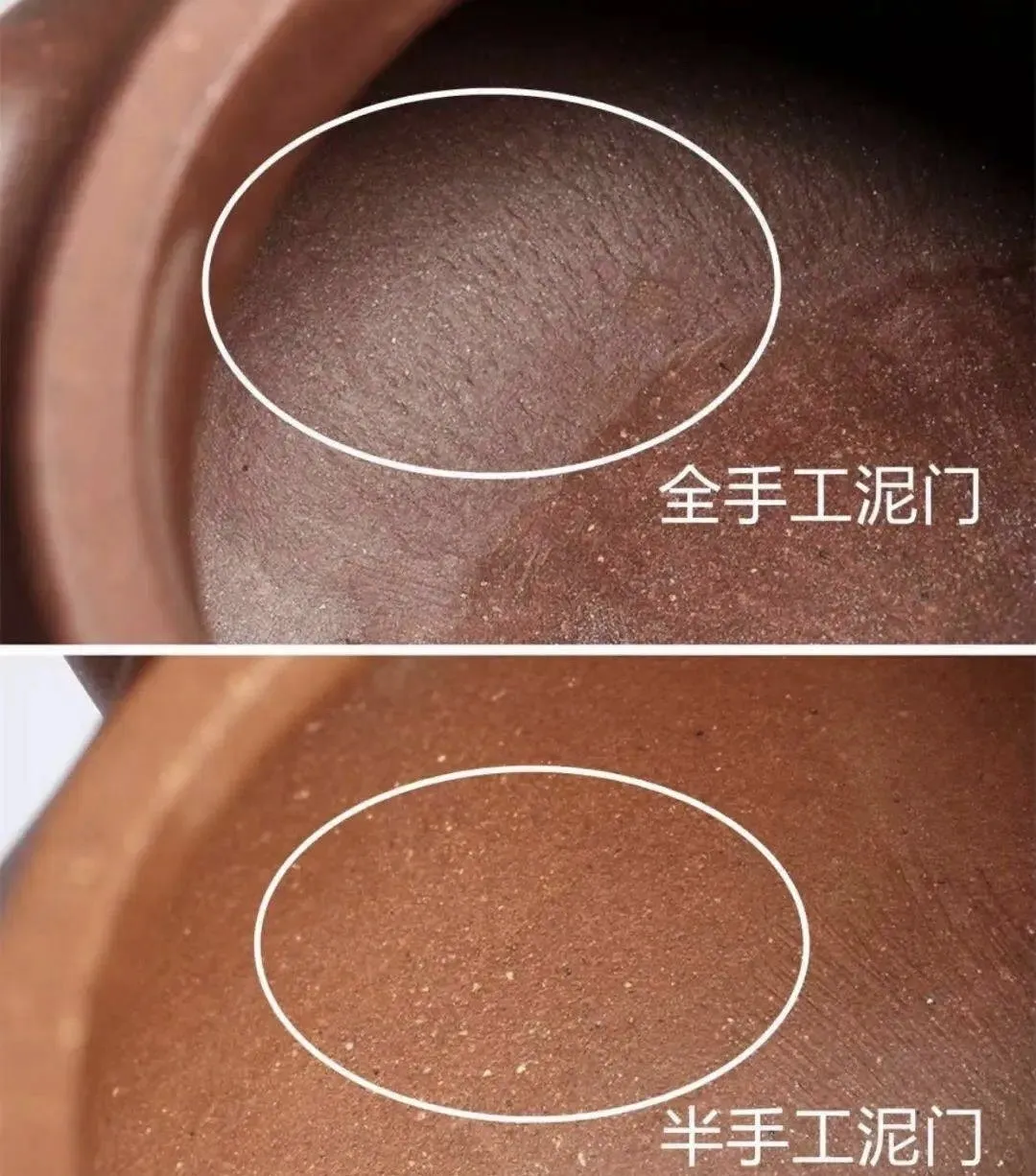
Check the rim: Fully handcrafted teapots carry traces of added clay paste on the rim, and the inner edge of the rim feels rough. Semi-handmade teapots use pre-added clay in one step, which creates shrinkage lines. Machine-pressed teapots have sharp, well-defined edges with a very smooth, polished finish.
Step 4: Examine the Markings — The Teapot’s ID Card
Markings are the stamps found on the teapot base, lid or under the handle. They serve as important references to identify the maker and age of the teapot.
Clarity and depth: Authentic marks are stamped while the clay is still moist. The characters are clear, well-impressed with crisp edges, carrying the charm of calligraphy and stone seal carving.
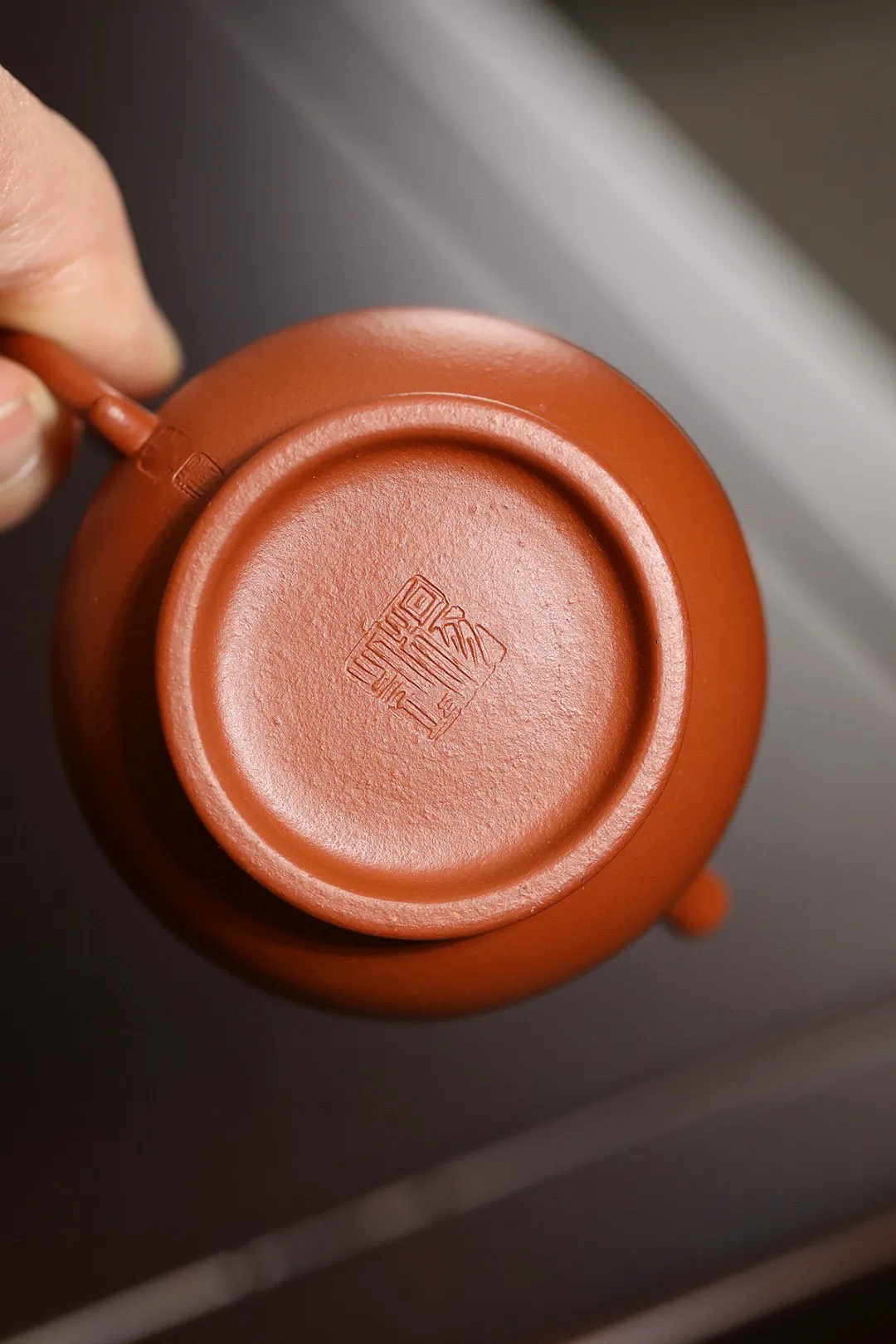
Consistent style: An artisan maintains a consistent seal style within a certain period. You may compare the stamp against reference materials for verification.
Step 5: Test the Function — Practical Verification of the Teapot
The previous four steps rely on visual inspection. For this final step, we run a practical test. It is the most intuitive way to tell a real Zisha teapot apart.
Water pouring test: Slowly pour boiling water over the teapot body. Thanks to good air permeability and water absorption of genuine Zisha clay, the water will be absorbed quickly and form an even thin water film. The clay darkens slightly, without obvious water beads clinging to the surface. Fake pots or pots made of low-density clay will make water bead up and roll off the wall, showing the “beading” effect.
Listen to the sound: Gently tap the teapot body with its lid. A genuine Zisha teapot produces a dull, muffled “puff-puff” sound, much like tapping a clay tile. Porcelain pots or fake Zisha teapots treated with glass additives will sound sharp and bright, with a clear metallic “ding-ding” ring.
To sum up, three golden rules for beginners:
Do not chase low prices. You get what you pay for. A genuine handcrafted Zisha teapot made from original ore costs materials, time and great effort. It cannot be sold for merely tens or one hundred US dollars. A semi-handmade pot takes 1 to 2 days to finish, while a fully handmade pot needs 3 to 5 days. You can refer to factory craftsmen’s labour costs; teapot makers also need to support their families. Any teapot priced far too low must have hidden problems.
Focus on the basics first. Do not rush to buy “masterpiece teapots” from famous artists. Start with a practical teapot made of pure clay and solid craftsmanship. When you brew tea with it, watch its gradual change and develop a smooth patina through regular use, you will truly enjoy the charm of Zisha.
Observe and learn constantly. Find reliable merchants or platforms, examine real teapots in person, and communicate with other tea lovers. Accumulated knowledge and experience are your best defence against scams.

Leave a Reply