
Goat fat jade porcelain stands out among many tea ceramics because it mimics the soft, warm glow of fine jade. When shopping for teacups, many buyers only judge by photos, which makes it easy to pick low-quality replicas. Once you know these key features, you can quickly tell excellent goat fat jade porcelain teacups from imitations in person.
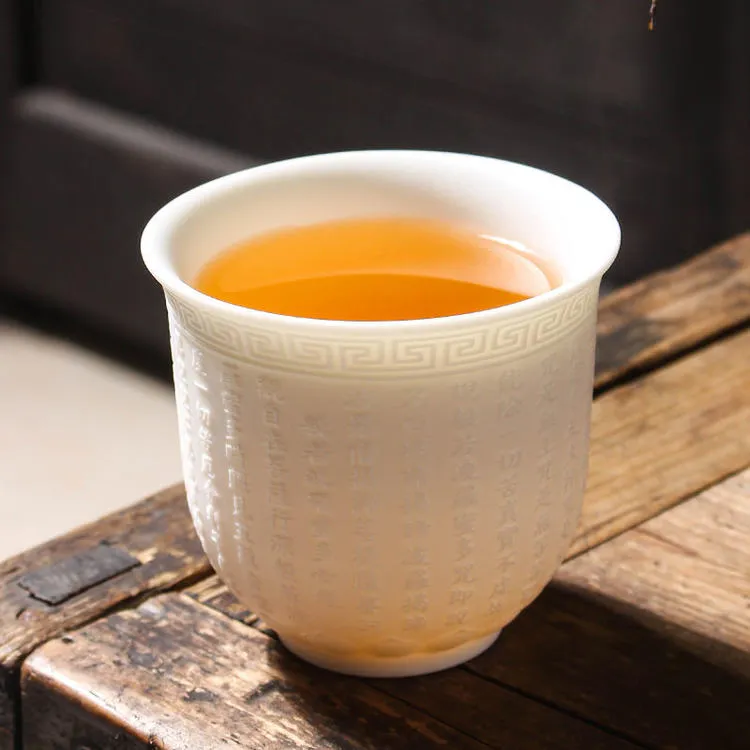
First, look closely at the glaze tone. True goat fat jade porcelain does not look bright cold white. It carries a subtle milky warm tint, like creamy jade. Cheap white porcelain usually appears stark and icy under light. Run your finger lightly across the surface; top-tier glaze is silky and smooth, without tiny bumps, pinholes or rough grainy spots. The surface feels dense and solid, not thin or fragile.
Light transmission is another simple test. Hold the cup up to soft natural light. High-quality pieces show gentle, even translucency. The light diffuses softly instead of shining sharply through the wall. If the porcelain is too transparent, it is likely thin common white porcelain rather than genuine goat fat jade material.
Also pay attention to the wall thickness and sound. Tap the side of the cup gently with your finger. Good goat fat jade porcelain gives out a clear, pure and lingering tone. Inferior alternatives produce dull, flat sounds. It does not absorb tea odor easily, so you can switch between different light aroma teas without lingering old flavors interfering. These traits make it a favorite choice for tasting white tea and light oolong, letting you enjoy the original clean aroma of every brew.
Leave a Reply