
Many tea beginners struggle to tell apart handmade Yixing teapot and machine made versions. The price gap is huge, and the brewing experience can be very different, even if they look nearly identical at first glance. It is not only about appearance, but also about the inner structure and clay treatment.
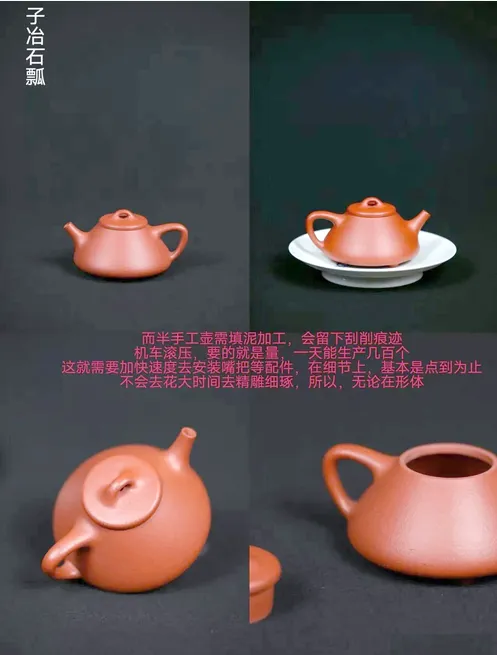
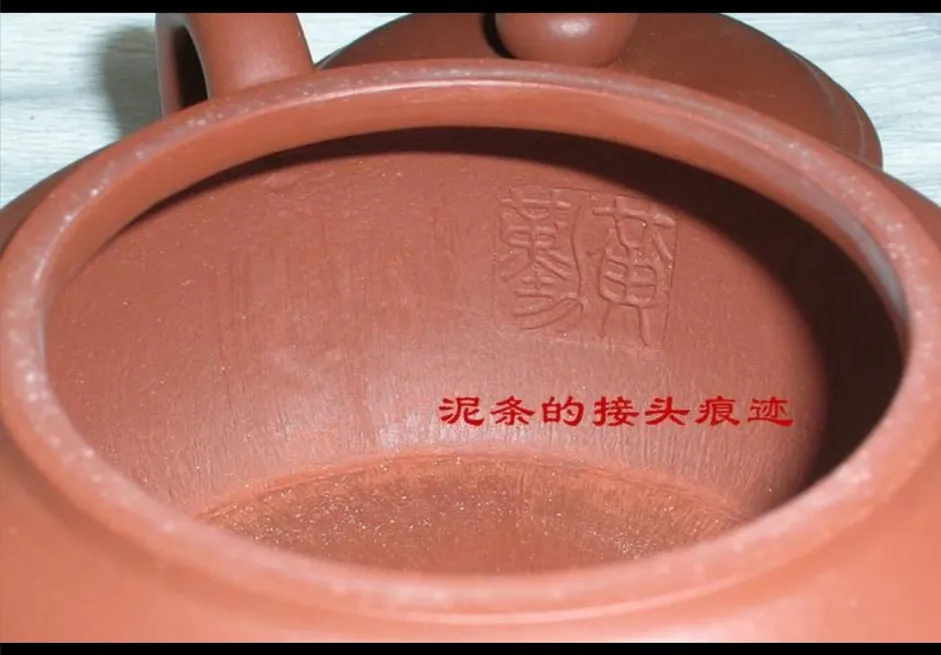
Body marks are the most reliable clue. Handmade pots are built by coiling clay slabs, so you can see faint spiral marks or uneven lines on the inner wall. Machine pressed pots usually have smooth, uniform inner walls with no natural hand traces. Do note that some sellers will fake inner marks, so you cannot rely on this single feature alone.
The lid fit is another key point. A well-made handmade pot has a tight, consistent gap between lid and rim. The gap stays even when you spin the lid. Machine pots often have uneven gaps, and the lid may wobble noticeably. Good sealing helps lock heat inside, which is important for steady gongfu tea brewing.
When it comes to clay performance, handmade pots usually go through slower, careful clay refining. The clay particles keep a natural loose structure. Machine pots use compressed clay, which is denser and less breathable. This changes how the pot interacts with tea over time. A genuine handmade pot develops a softer, richer patina after long use.
You should also watch the weight. A pure handmade pot feels balanced, not overly heavy or light. Machine pressed teapots tend to feel stiff and uniform. If you are shopping for daily use, machine pots can still serve well, but collectors and serious tea lovers often prefer handmade works for unique texture and long-term aging potential.
Leave a Reply